Car Rental Deposit in Spain Explained


A car hire deposit can appear in two very different ways: as a pending pre-authorisation or as a completed card charge. That distinction affects where the money sits, what appears on your statement and what needs to happen after the rental.
The amount is not set by Spanish law and it does not automatically equal the damage excess. The only useful figure is the one stated for your supplier, rate and vehicle group.
Deposit, excess and payment are different
A pre-authorisation reserves an amount on the card. On a credit card it normally reduces available credit. On a debit or prepaid product it may reduce the balance you can use, depending on the issuer and transaction.
The excess is your maximum contractual liability for a covered damage or theft claim. The rental payment is the price charged for the booking. These numbers may be different.
A zero-excess rate does not inherently mean zero deposit. A supplier may still reserve money for fuel, fines, missing equipment or another contractual charge. Conversely, a product can explicitly include both zero excess and no deposit. Verify each promise separately.
Find five details before booking
Do not use a Spain-wide deposit estimate. Open the payment and collection terms for the actual offer and find:
- The exact amount to be reserved
- Whether it is a pre-authorisation or charge
- Accepted card type and card brands
- Whose name must be on the card
- The required available balance or credit
European Consumer Centre Spain warns that a card accepted for the online reservation may still be refused as the collection guarantee. The collection rule can require a credit card in the driver's name even when a debit card paid for the booking.
That is not a universal rule for every company. It is a reason to read the collection conditions rather than assuming the checkout page tested the card you will present.
Check the terminal before approving:
EU payment rules require consent to the exact amount being blocked when that amount is known in advance. Compare the terminal amount with the rental terms and keep the pre-authorisation receipt.
What happens after return?
Returning the keys does not always close the pre-authorisation immediately. The supplier may first inspect the car, calculate fuel or other agreed charges and send a reversal or final settlement through its payment provider.
EU payment rules require blocked funds to be released without undue delay once the final transaction amount is known and received by the payer's payment provider. They do not create a universal promise that every car hire hold disappears in a fixed number of working days.
At return, ask for:
- A closed rental agreement
- A signed condition report or return receipt
- Written confirmation of any amount still due
- Confirmation of when the supplier submitted the reversal or final settlement
Then check the card account. A pending hold and a posted charge are not the same problem. If the entry remains pending after the supplier says it has reversed it, ask your card issuer what reference or release evidence it needs. If it becomes a completed charge you do not recognise, request the supplier's contractual basis and evidence before treating it as a simple delayed hold.
How to avoid the hold
Some rates explicitly offer collection without a security deposit. Do not assume this follows automatically from “full cover”; look for a separate no-deposit statement in the offer and confirmation.
With RentaCarBestPrice there is no deposit, and you do not need a credit card. Full cover is included in the rate. That is the standard product, not something you have to infer from an insurance label.
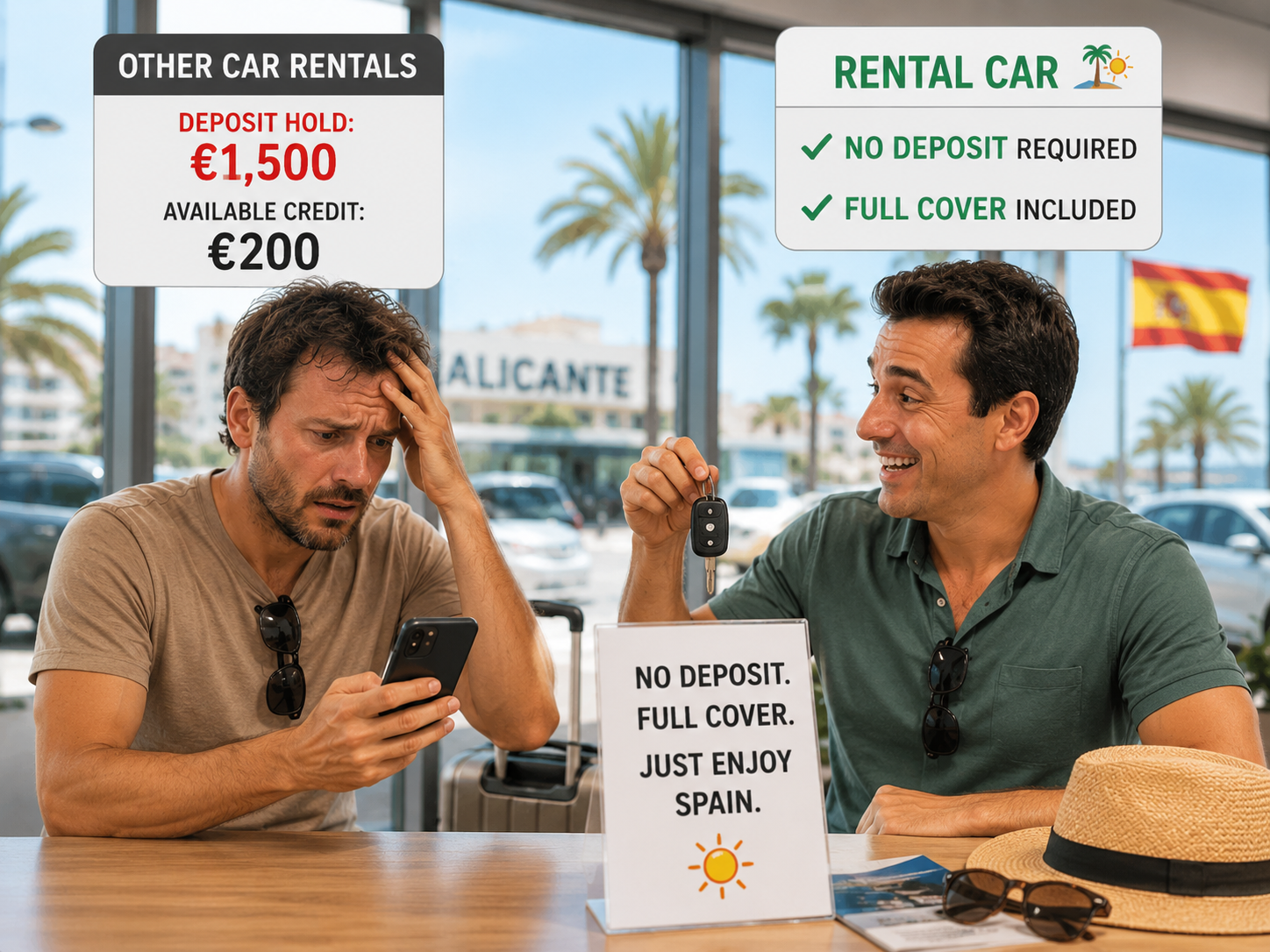
The practical rule is simple: save the exact hold amount and card conditions before paying, verify the terminal amount at collection, and leave with documents showing how the rental was closed.
Sources: European Consumer Centre Spain car-rental guidance, EU Payment Services Directive, Article 75, and the European Commission report on payment-service pre-authorisations. Last checked: September 2026.