Five Car Hire Checks Before You Pay

The risky part of airport car hire is often the gap between the first price you see and the contract you finally sign. Calling every extra charge a scam is not useful. Some are disclosed contractual charges; others may be misleading or unfair.
The better approach is to test five things before payment, then make sure the collection contract still matches.
1. Identify the broker and supplier
A comparison site or broker may take the booking while a different rental company supplies the car. Their responsibilities are not interchangeable. Save the names of both, the final offer and the supplier's rental terms.
This matters if the car group changes, an extra appears or you need to complain. A broker's booking confirmation is not a substitute for the supplier's collection rules.
An EU consumer-protection sweep of 78 car-rental intermediary websites in 2022 found only 45% clearly compliant. Almost half did not clearly explain what insurance included or excluded, and 21% used preselected paid extras. Those findings do not condemn every site; they explain why the final page deserves attention.
2. Calculate the fuel policy
With full-to-full, you receive the car with a stated fuel level and return it at the same level. Keep the final fuel receipt and photograph the gauge.
Other policies can charge for a tank or refuelling service. They are not automatically unlawful, but the fuel price—or its calculation method—and any service charge should be disclosed before booking or signing.
Do this calculation:
Final fuel cost = fuel charge + service fee − stated refund
If any figure is missing, you cannot compare that offer properly with full-to-full.
3. Compare cover line by line
Do not compare “basic”, “premium” and “full” by name. Record:
- Damage excess and theft excess
- Excluded parts
- Excluded uses or driver conduct
- Deposit required at collection
- Whether cover is a supplier waiver or reimbursement policy
If the counter offers different cover, ask for the new total and the exact changes in writing. An online reimbursement policy may still require you to pay the supplier first and make a later claim.
4. Verify the deposit and card rule
A card used successfully online may not satisfy the supplier's collection guarantee. Check the exact deposit, accepted card type, cardholder name and required available credit.
Deposit and excess are different. The hold need not equal the excess, and buying additional cover does not automatically remove it. See our deposit guide for the documents to retain.
5. Build a condition record
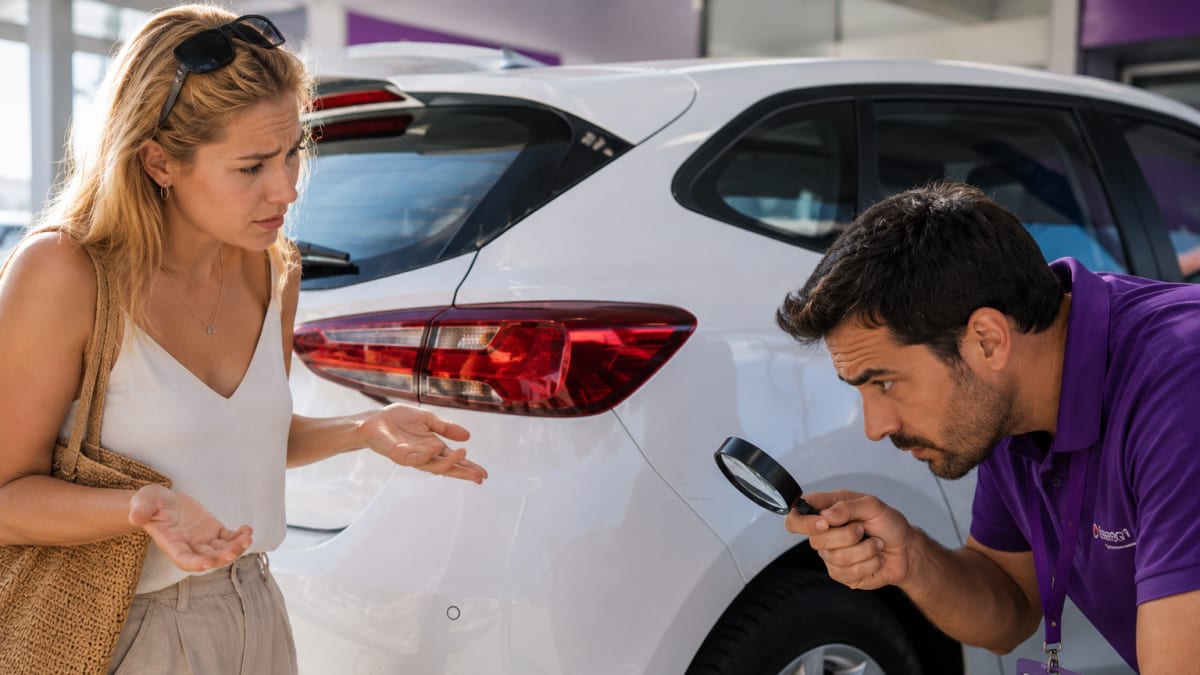
At collection, photograph every panel, wheel, glass surface, the interior, odometer and fuel gauge. Make sure existing marks appear on the signed condition report.
Repeat the photographs at return. Where possible, return during opening hours, inspect the car with an employee and obtain written confirmation of its condition. European guidance warns that an unattended return may leave you responsible until the supplier inspects the vehicle.
For companies covered by the European Commission's car-rental commitments, an alleged damage charge should come with supporting evidence and a repair invoice or fair cost assessment, plus a chance to challenge it. The commitment applies to named companies, not automatically to every supplier.
Compare the complete offer:
RentaCarBestPrice includes full cover, full-to-full fuel and no deposit as part of the rate. You do not need a credit card. Keep the selected offer before payment rather than relying on the headline price alone.
There is no automatic EU cooling-off period for car hire booked for specific dates. Check cancellation terms before paying; discovering a poor fuel or deposit rule afterwards may not give you a free cancellation right.
Sources: European Commission car-rental website sweep, European Consumer Centre Spain car-rental guidance, European Commission car-rental commitments, and Your Europe car-rental FAQ. Last checked: September 2026.